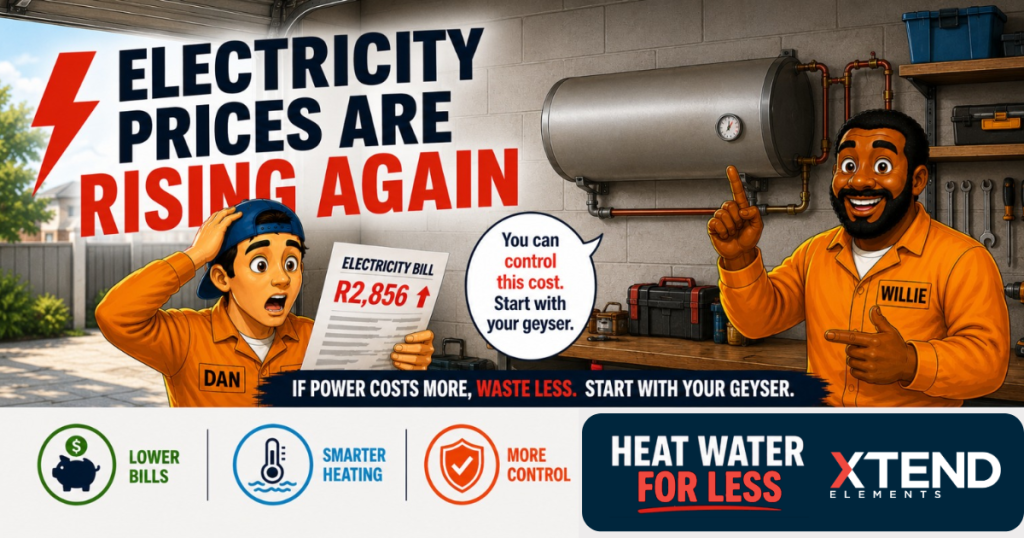
Electricity Prices Are Rising Again in South Africa & Why Your Geyser Matters More Than Ever
May 7, 2026Electricity Prices Are Rising Again in South Africa & Why Your Geyser Matters More Than Ever
May 7, 2026Electricity Prices Are Rising Again in South Africa & Why Your Geyser Matters More Than Ever
May 7, 2026By Willie & Dan
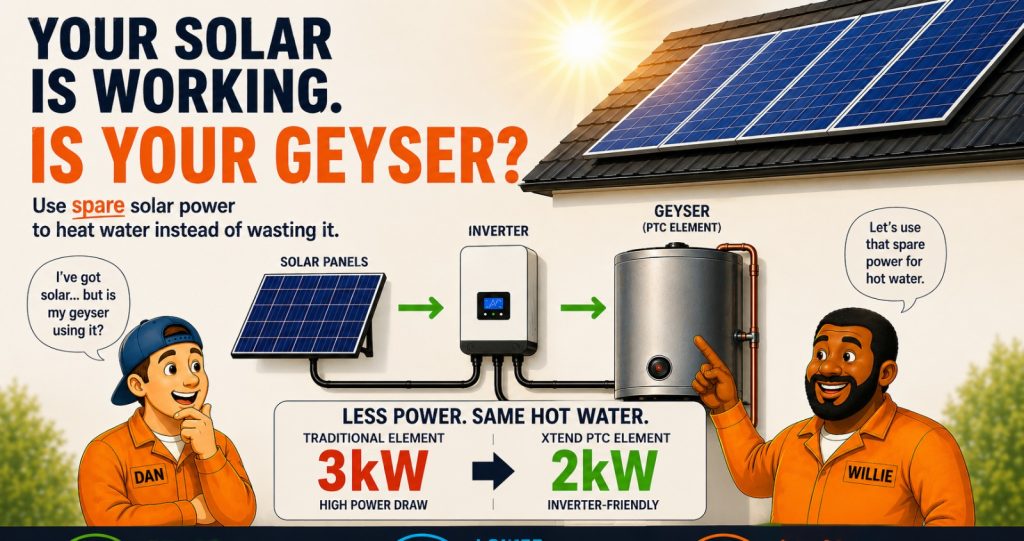
Got Solar? Then Your Geyser Should Also Be Benefiting from the Sun
Many South African homes now have solar PV systems powering lights, Wi-Fi, TVs, and appliances.
But there’s one major electricity user often left out of the system:
Your geyser.
That matters because water heating is one of the biggest energy loads in most homes. If your solar system isn’t helping with hot water, you may be missing one of the best ways to lower your electricity bill.
As Willie says:
“You bought the sunshine — now use all of it.”
Why Most Geysers Aren’t Solar-Friendly
Traditional geyser elements often draw 3kW to 4kW when heating.
That high demand can create problems for many residential solar systems:
Dan puts it simply:
“Your geyser can become the bully in the energy budget.”
Your Geyser Can Become a Thermal Battery
Here’s the smart shift in thinking:
Instead of storing all energy in electrical batteries, you can also store energy as hot water.
Heat water during sunny midday hours, then use that stored heat later for showers, baths, dishes, and cleaning.
That means your geyser becomes a thermal battery.
Benefits include:
✅ Better use of excess daytime solar
✅ Lower evening grid usage
✅ Reduced pressure on batteries
✅ More value from your solar investment
✅ Hot water ready when needed
The Secret Is Matching the Load
Solar works best when appliances match the available power.
A lower-draw geyser heating solution can be easier for many systems to manage than a traditional high-load element.
This is why many homeowners now look for:
The goal is simple:
Use solar when the sun is shining.
Simple Setup Tips
You don’t always need a major system upgrade.
Often, smart control makes a big difference.
Start here:
Know whether your geyser is using a high-load element.
Use timers or automation to run between late morning and early afternoon.
Make sure your installer checks what your system can comfortably handle.
Run major loads strategically instead of all at once.
Why This Matters Financially
Final Word
Your solar system should do more than power lights.
Hot water is one of the biggest opportunities for household savings.
If your geyser is still operating like it’s 2005, it may be time to modernise the way it heats.
Willie’s final advice:
“Don’t let your solar power stop at the plug points.”
Use the sun smarter.
Use hot water smarter.
Use your system properly.
By Willie & Dan
Got Solar? Then Your Geyser Should Also Be Benefiting from the Sun
Many South African homes now have solar PV systems powering lights, Wi-Fi, TVs, and appliances.
But there’s one major electricity user often left out of the system:
Your geyser.
That matters because water heating is one of the biggest energy loads in most homes. If your solar system isn’t helping with hot water, you may be missing one of the best ways to lower your electricity bill.
As Willie says:
“You bought the sunshine — now use all of it.”
Why Most Geysers Aren’t Solar-Friendly
Traditional geyser elements often draw 3kW to 4kW when heating.
That high demand can create problems for many residential solar systems:
Dan puts it simply:
“Your geyser can become the bully in the energy budget.”
Your Geyser Can Become a Thermal Battery
Here’s the smart shift in thinking:
Instead of storing all energy in electrical batteries, you can also store energy as hot water.
Heat water during sunny midday hours, then use that stored heat later for showers, baths, dishes, and cleaning.
That means your geyser becomes a thermal battery.
Benefits include:
✅ Better use of excess daytime solar
✅ Lower evening grid usage
✅ Reduced pressure on batteries
✅ More value from your solar investment
✅ Hot water ready when needed
The Secret Is Matching the Load
Solar works best when appliances match the available power.
A lower-draw geyser heating solution can be easier for many systems to manage than a traditional high-load element.
This is why many homeowners now look for:
The goal is simple:
Use solar when the sun is shining.
Simple Setup Tips
You don’t always need a major system upgrade.
Often, smart control makes a big difference.
Start here:
Know whether your geyser is using a high-load element.
Use timers or automation to run between late morning and early afternoon.
Make sure your installer checks what your system can comfortably handle.
Run major loads strategically instead of all at once.
Why This Matters Financially
Final Word
Your solar system should do more than power lights.
Hot water is one of the biggest opportunities for household savings.
If your geyser is still operating like it’s 2005, it may be time to modernise the way it heats.
Willie’s final advice:
“Don’t let your solar power stop at the plug points.”
Use the sun smarter.
Use hot water smarter.
Use your system properly.