Episode 5: Flexible Payment Plans for XTEND Elements
November 28, 2025
Why Your Geyser Should Be on Solar… and Why Most Aren’t Yet
June 19, 2026Electricity Prices Are Rising Again in South Africa & Why Your Geyser Matters More Than Ever
By Willie & Dan
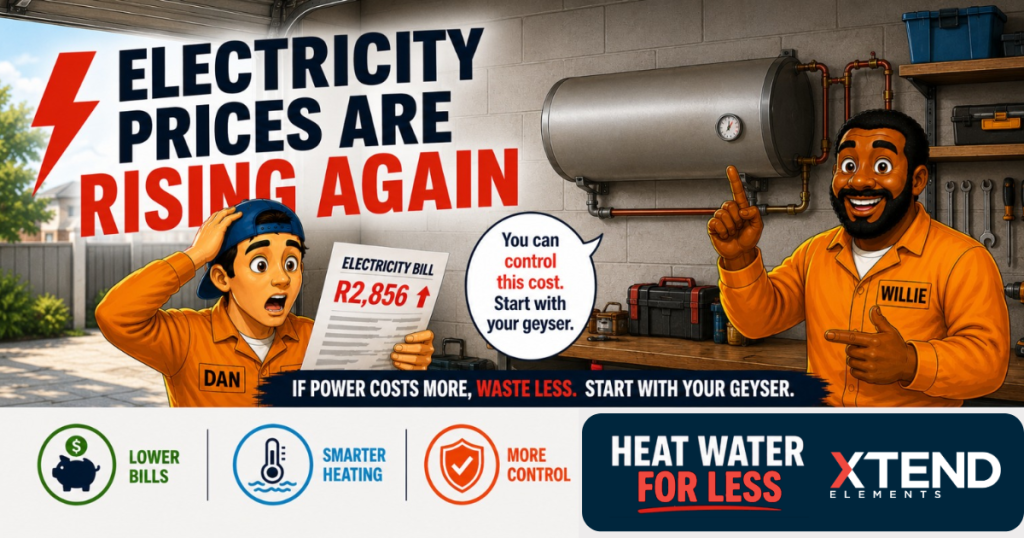
Another Electricity Increase? Yes.
South Africans are facing another round of electricity price increases in 2026.
The latest approved tariff adjustments mean:
- Eskom direct customers: average +8.76% from 1 April 2026
- Municipal customers: average +9.01% from 1 July 2026
For many households, that means higher monthly costs - without using any more electricity than before.
The Real Problem Isn’t Only the Tariff
When prices rise, every inefficient appliance becomes more expensive to run.
And in many homes, one of the biggest electricity users is:
Your geyser.
Water heating can account for a significant share of household energy use, which means rising tariffs hit hot water costs especially hard.
Willie says:
“When power gets pricier, waste gets pricier too.”
Why the Geyser Deserves Attention First
Many people focus on lights, kettles, or standby devices.
But short bursts of small appliances are often less important than a large heating load that runs regularly.
Your geyser may be costing you more than you realise because of:
- unnecessary heating hours
- high thermostat settings
- heat losses
- ageing components
- poor timing
- scale build-up in some areas
- inefficient heating technology
7 Smart Ways to Lower Hot Water Costs
1. Use a Timer
Your geyser usually doesn’t need to heat all day.
Heating closer to real usage times can reduce unnecessary reheating.
Please remember that some devices have a slow heat sensor, in which case, there is a specific installation requirement to ensure performance.
2. Check the Temperature Setting
For many homes, around 60°C may be a practical range (subject to installer guidance and hygiene requirements).
Higher temperatures often mean higher losses.
3. Fix Leaks Immediately
A leaking valve or dripping hot-water line wastes both:
- water
- the electricity used to heat that water
4. Insulate Where Possible
Insulation on pipes or a geyser blanket can help reduce heat loss.
5. Service an Older Geyser
Old thermostats, tired elements, and hidden issues can quietly increase running costs.
6. Heat Water During Solar Hours
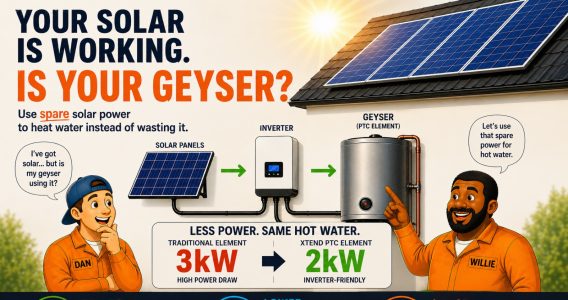
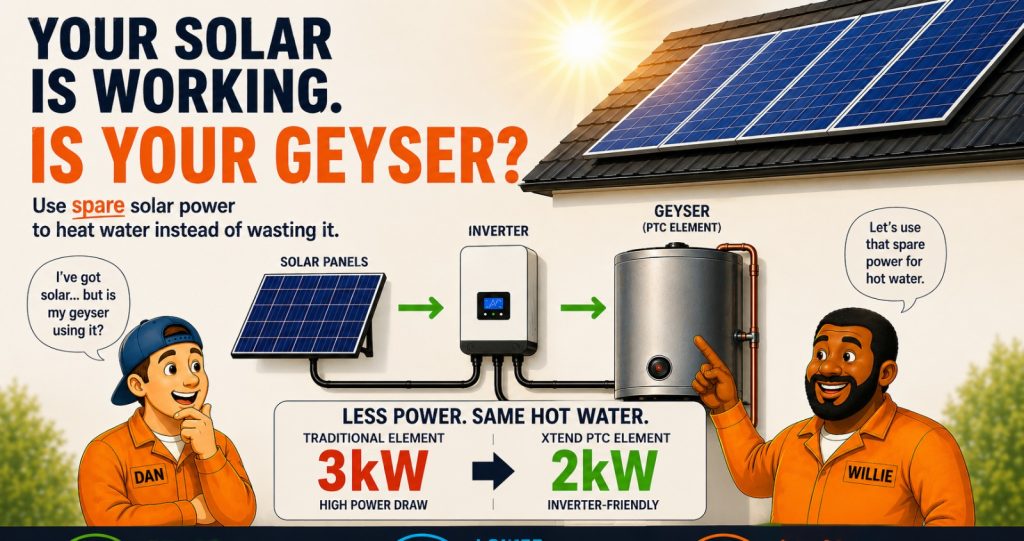
If you have solar PV, use midday sunshine to help heat water instead of buying expensive grid power later.
7. Upgrade the Heating Technology
If your element is old, scaled, or inefficient, upgrading can improve long-term performance and running costs depending on your setup.
Dan says:
“If prices keep going up, your geyser must start pulling its weight.”
What Rising Prices Mean in Practice
|
Scenario |
Before Increase |
After Increase |
|
Efficient home |
Lower bill |
Manageable increase |
|
Wasteful geyser habits |
High bill |
Even higher bill |
|
Smart hot water strategy |
Better control |
Better protection |
The Bigger Opportunity
Most people cannot control national electricity prices.
But you can control how efficiently your home uses power.
That’s where smarter geyser management becomes valuable:
- lower waste
- lower monthly spend
- better use of solar
- more control over future increases
Final Word
Another tariff increase is frustrating.
But it can also be the moment you take control of the costs you can control.
Start with the biggest loads first.
Start with smarter hot water use.
Start with your geyser.
Willie’s final advice:
“You may not choose the tariff - but you can choose how much you waste.”
By Willie & Dan
Another Electricity Increase? Yes.
South Africans are facing another round of electricity price increases in 2026.
The latest approved tariff adjustments mean:
- Eskom direct customers: average +8.76% from 1 April 2026
- Municipal customers: average +9.01% from 1 July 2026
For many households, that means higher monthly costs - without using any more electricity than before.
The Real Problem Isn’t Only the Tariff
When prices rise, every inefficient appliance becomes more expensive to run.
And in many homes, one of the biggest electricity users is:
Your geyser.
Water heating can account for a significant share of household energy use, which means rising tariffs hit hot water costs especially hard.
Willie says:
“When power gets pricier, waste gets pricier too.”
Why the Geyser Deserves Attention First
Many people focus on lights, kettles, or standby devices.
But short bursts of small appliances are often less important than a large heating load that runs regularly.
Your geyser may be costing you more than you realise because of:
- unnecessary heating hours
- high thermostat settings
- heat losses
- ageing components
- poor timing
- scale build-up in some areas
- inefficient heating technology
7 Smart Ways to Lower Hot Water Costs
1. Use a Timer
Your geyser usually doesn’t need to heat all day.
Heating closer to real usage times can reduce unnecessary reheating.
Please remember that some devices have a slow heat sensor, in which case, there is a specific installation requirement to ensure performance.
2. Check the Temperature Setting
For many homes, around 60°C may be a practical range (subject to installer guidance and hygiene requirements).
Higher temperatures often mean higher losses.
3. Fix Leaks Immediately
A leaking valve or dripping hot-water line wastes both:
- water
- the electricity used to heat that water
4. Insulate Where Possible
Insulation on pipes or a geyser blanket can help reduce heat loss.
5. Service an Older Geyser
Old thermostats, tired elements, and hidden issues can quietly increase running costs.
6. Heat Water During Solar Hours
If you have solar PV, use midday sunshine to help heat water instead of buying expensive grid power later.
7. Upgrade the Heating Technology
If your element is old, scaled, or inefficient, upgrading can improve long-term performance and running costs depending on your setup.
Dan says:
“If prices keep going up, your geyser must start pulling its weight.”
What Rising Prices Mean in Practice
| Scenario | Before Increase | After Increase |
|---|---|---|
| Efficient home | Lower bill | Manageable increase |
| Wasteful geyser habits | High bill | Even higher bill |
| Smart hot water strategy | Better control | Better protection |
The Bigger Opportunity
Most people cannot control national electricity prices.
But you can control how efficiently your home uses power.
That’s where smarter geyser management becomes valuable:
- lower waste
- lower monthly spend
- better use of solar
- more control over future increases
Final Word
Another tariff increase is frustrating.
But it can also be the moment you take control of the costs you can control.
Start with the biggest loads first.
Start with smarter hot water use.
Start with your geyser.
Willie’s final advice:
“You may not choose the tariff - but you can choose how much you waste.”
Related posts