




XTEND geyser elements come in two fitting types:
50mm Flange – The most common type, compatible with Kwikot and Ariston (Heattech) geysers.
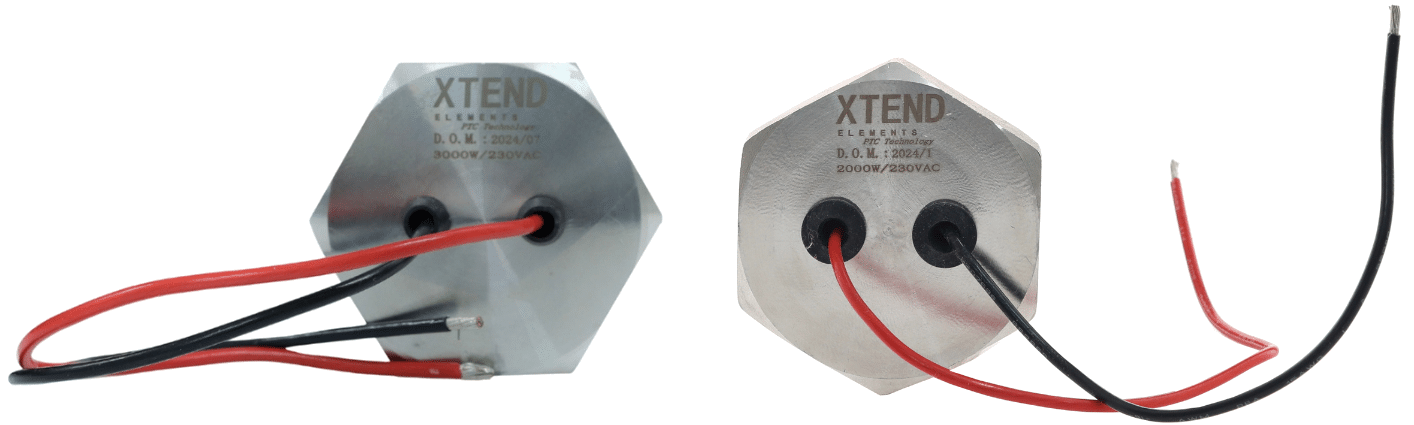
35mm Screw-In / Boss – Found in Apollo and older geysers.
We have a 316 Stainless Steel range for Municipal water and a Titanium range for Borehole / untreated water.
Find the right element for your geyser
50mm Flange Models
35mm Screw-in Models


XTEND_element_2kw_Flange_Stainless_Steel
XTEND_element_3kw_Flange_Stainless_Steel_side_d6d44273-bf51-4f9c-b17a-86fe8c1b8616
XTEND_element_3kw_Flange_Stainless_Steel_side_d6d44273-bf51-4f9c-b17a-86fe8c1b8616
XTEND_element_3kw_Flange_Stainless_Steel_side_d6d44273-bf51-4f9c-b17a-86fe8c1b8616


XTEND_element_2kw_Flange_Stainless_Steel
2kW Screw-in Stainless Steel
XTEND_element_3kw_Flange_Stainless_Steel_side_d6d44273-bf51-4f9c-b17a-86fe8c1b8616
XTEND_element_3kw_Flange_Stainless_Steel_side_d6d44273-bf51-4f9c-b17a-86fe8c1b8616
XTEND_element_3kw_Flange_Stainless_Steel_side_d6d44273-bf51-4f9c-b17a-86fe8c1b8616
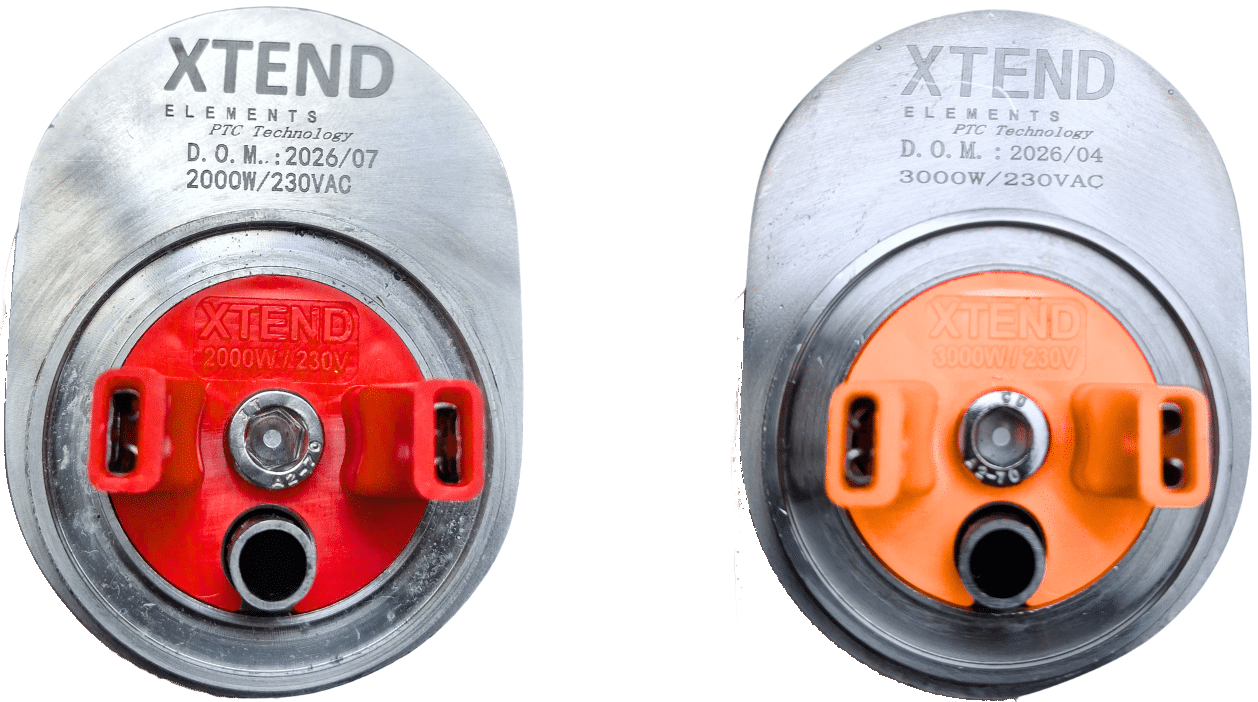

XTEND geyser elements come in two fitting types:
50mm Flange – The most common type, compatible with Kwikot and Ariston (Heattech) geysers.
35mm Screw-In / Boss – Found in older geysers, such as GAP geysers.
We have a 316 Stainless Steel range for Municipal water and a Titanium range for Borehole / untreated water.
Find the right element for your geyser
50mm Flange Mount
XTEND_element_2kw_Flange_Stainless_Steel
XTEND_element_3kw_Flange_Stainless_Steel_side_d6d44273-bf51-4f9c-b17a-86fe8c1b8616
XTEND_element_3kw_Flange_Stainless_Steel_side_d6d44273-bf51-4f9c-b17a-86fe8c1b8616
XTEND_element_3kw_Flange_Stainless_Steel_side_d6d44273-bf51-4f9c-b17a-86fe8c1b8616
35mm Boss Screw-in
XTEND_element_2kw_Flange_Stainless_Steel
2kW Screw-in Stainless Steel
XTEND_element_3kw_Flange_Stainless_Steel_side_d6d44273-bf51-4f9c-b17a-86fe8c1b8616
XTEND_element_3kw_Flange_Stainless_Steel_side_d6d44273-bf51-4f9c-b17a-86fe8c1b8616
XTEND_element_3kw_Flange_Stainless_Steel_side_d6d44273-bf51-4f9c-b17a-86fe8c1b8616
XTEND geyser elements come in two fitting types:
50mm Flange – The most common type, compatible with Kwikot and Ariston (Heattech) geysers.
35mm Screw-In / Boss – Found in older geysers.
We have a 316 Stainless Steel range for Municipal water and a Titanium range for Borehole / groundwater.
Find the right element for your geyser
50mm Flange Models
XTEND_element_2kw_Flange_Stainless_Steel
XTEND_element_3kw_Flange_Stainless_Steel_side_d6d44273-bf51-4f9c-b17a-86fe8c1b8616
XTEND_element_3kw_Flange_Stainless_Steel_side_d6d44273-bf51-4f9c-b17a-86fe8c1b8616
XTEND_element_3kw_Flange_Stainless_Steel_side_d6d44273-bf51-4f9c-b17a-86fe8c1b8616
35mm Screw-in Models
XTEND_element_2kw_Flange_Stainless_Steel
2kW Screw-in Stainless Steel
XTEND_element_3kw_Flange_Stainless_Steel_side_d6d44273-bf51-4f9c-b17a-86fe8c1b8616
XTEND_element_3kw_Flange_Stainless_Steel_side_d6d44273-bf51-4f9c-b17a-86fe8c1b8616
XTEND_element_3kw_Flange_Stainless_Steel_side_d6d44273-bf51-4f9c-b17a-86fe8c1b8616
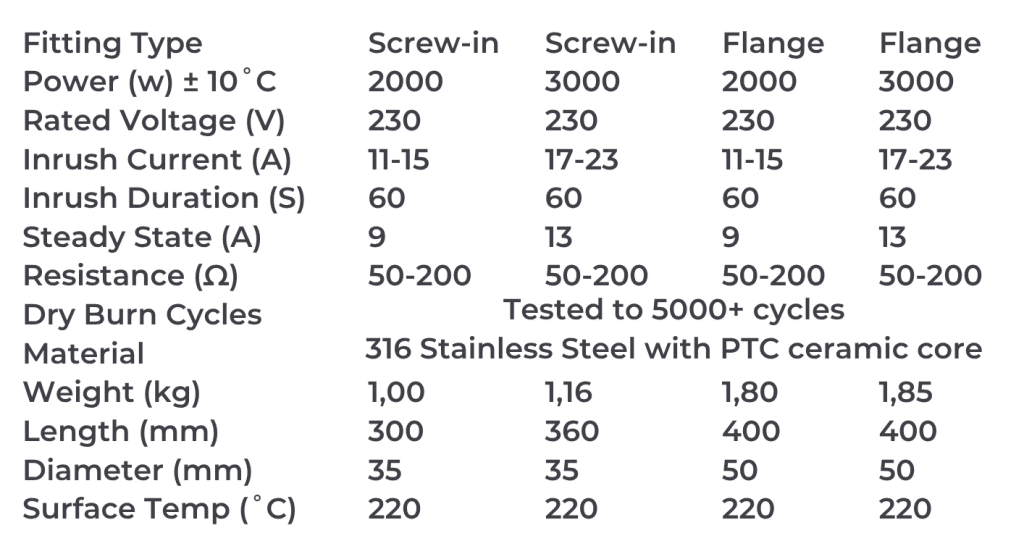
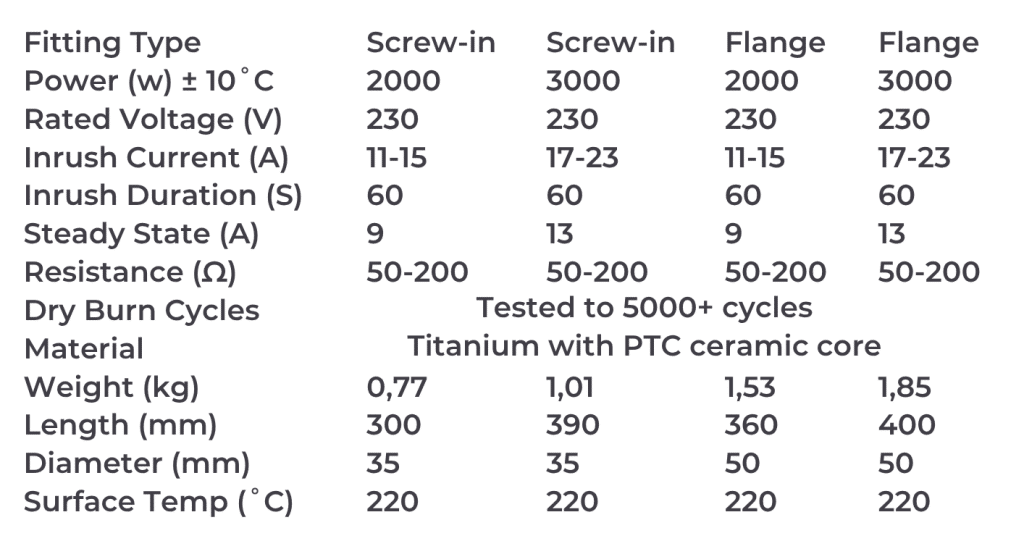
Technical Specifications
All XTEND elements are 220-240V AC only.
Stainless Steel
Titanium
Stainless Steel or Titanium XTEND element?
XTEND Elements are available in Stainless Steel and Titanium, with each material designed for specific water conditions. Selecting the correct element for your water supply will maximise performance, improve durability, and extend the lifespan of your geyser element.
Choose Stainless Steel if:
- You use municipal water that meets SANS 241 standards
- Your water is not highly corrosive
- You want a cost-effective option for a typical home
Choose Titanium if:
- You use borehole water
- Your water quality is unknown
- Your water has high chloride (salt) levels
- Your water contains high levels of iron or corrosive minerals
- Your water is known to be aggressive or corrosive
- You want maximum corrosion resistance and service life in challenging water conditions
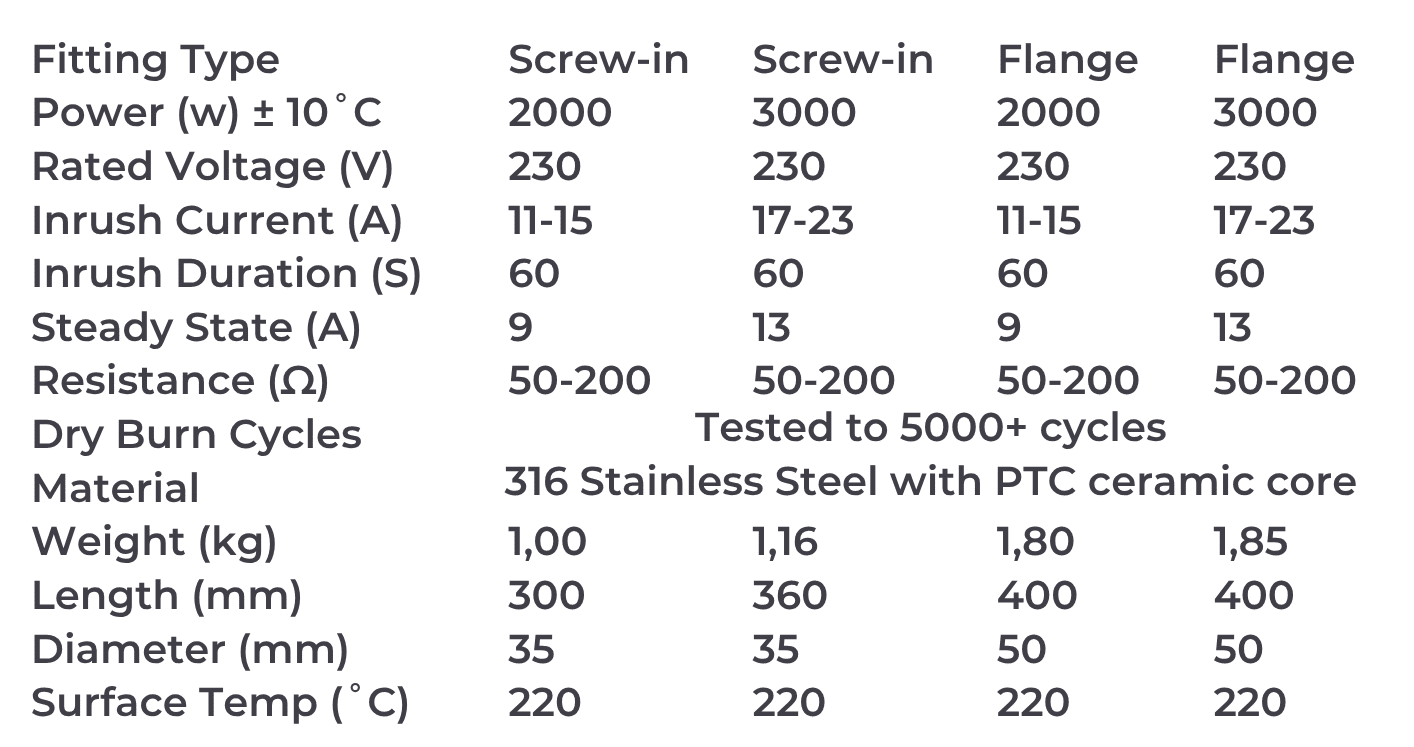
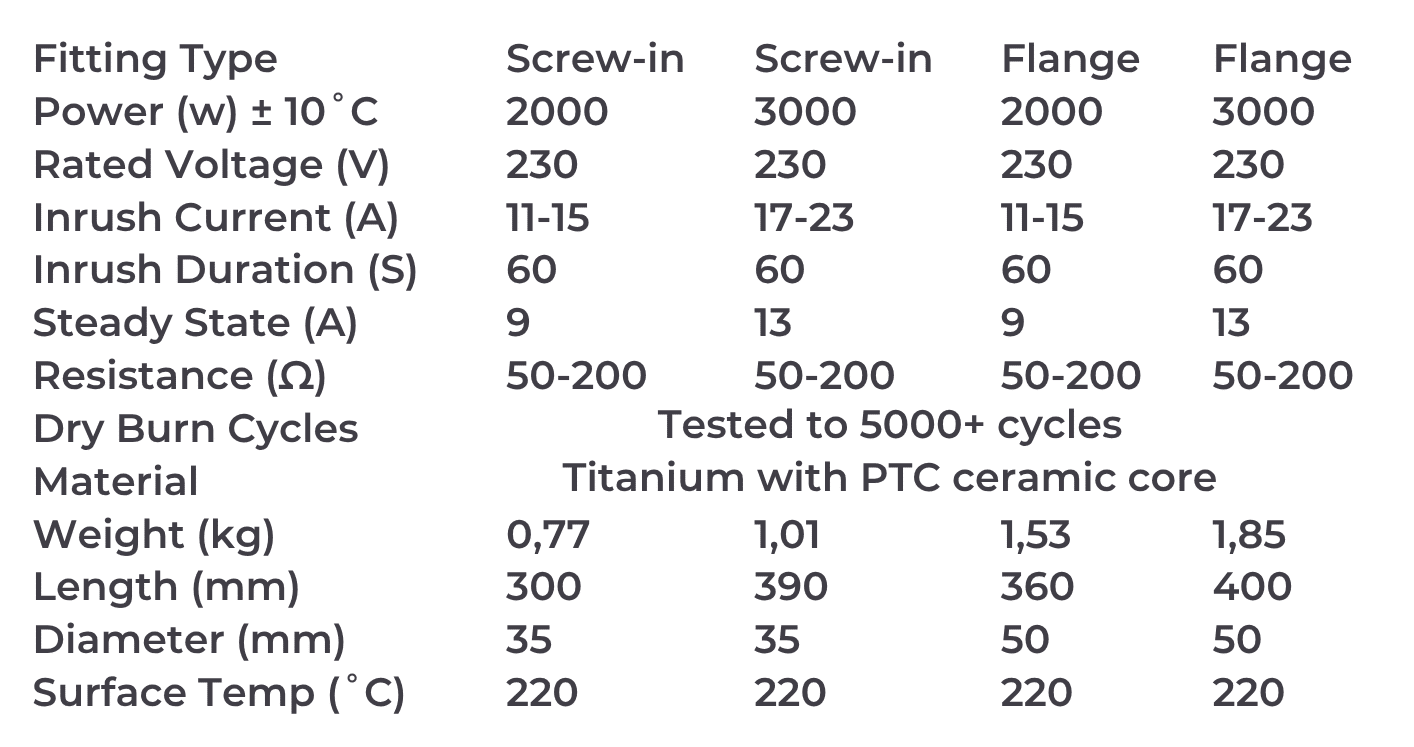
Technical Specifications
XTEND elements are 220-240V AC only.
Stainless Steel
Tinanium
Stainless Steel or Titanium XTEND element?
XTEND Elements are available in Stainless Steel and Titanium, with each material designed for specific water conditions. Selecting the correct element for your water supply will maximise performance, improve durability, and extend the lifespan of your geyser element.
Choose Stainless Steel if:
Choose Titanium if:
- You use municipal water that meets SANS 241 standards
- Your water is not highly corrosive
- You want a cost-effective option for a typical home
- You use borehole water
- Your water quality is unknown
- Your water has high chloride (salt) levels
- Your water contains high levels of iron or corrosive minerals
- Your water is known to be aggressive or corrosive
- You want maximum corrosion resistance and service life in challenging water conditions
XTEND 2kW vs Standard Spiral 3kW Heat up curve in 150L, B rated geyser

This independent test shows that an XTEND element uses 2kW to achieve around the same rate of heating as a 3kW resistive element.
These tests compare new elements. As scale-build up occurs, the comparative efficiency of an XTEND element increases further.
A standard resistive element can be as low as 50% efficient by the time it burns out.

XTEND Elements are extremely efficient and use less power than resistive elements, to heat water at the same rate.
XTEND elements are easy to install and require no additional parts.
PTC and Dry-burn Cycles
Due to the positive temperature coefficient (PTC) ceramic chips, XTEND elements stop drawing current when the PTC reaches 220°C. This is an attribute of PTC and does not require a thermostat.
When a geyser bursts or empties for any other reason, XTEND elements will reach 220°C and stop drawing power. The air inside is insulated by the geyser and has a low thermal capacity. This means it takes many minutes for the XTEND element to cool down and turn on again. When it does, it does so for a very short time, reaches 220°C, and turns off again. Each of these ON/OFF cycles is a dry-burn cycle.
The same applies to limescale build-up. In this case, XTEND elements can be removed, cleaned, and reinstalled to restore 100% efficiency. A standard element would burn out.
This property, along with the design of the 316 (marine-grade) stainless steel / Titanium casing, makes XTEND elements extremely hardwearing.
Thermostat
XTEND elements will last for many years. It is recommended that a new thermostat be installed at the same time as an XTEND element.
With the XTEND flange element, the thermostat pocket is lower in the tank than with a standard element. This means that you must set the thermostat around 5°C lower than it was with a standard resistive element to achieve the same total heat in the geyser.
The XTEND screw-in element does not have a probe pocket. Many geyser models have a separate probe pocket or a spare port that can be used for the probe. If the spare port is used for solar thermal or a heat pump, an alternative, flexible thermostat is required. Some geyser manufacturers supply these where required.
The temperature set point for the screw-in XTEND element depends on the probe's positioning in the specific element.
XTEND elements Maintenance
In normal water, XTEND Elements require no maintenance. There will be minimal scale build-up and only around the heating core, allowing efficient heat transfer through the rest of the stainless steel.
In hard water, XTEND Elements will scale up more slowly than a standard element, but it will still scale up. It will, however, not burn out.
We recommend removing the XTEND Element and using a solvent (E.g. Cal-C Clean) to remove the scale build-up. The XTEND element can be reinstalled and work at 100% efficiently. The frequency of the servicing depends on the quality of the water.
See XTEND elements & hard water for more information.
Technical Specifications
Technical Specifications
All XTEND elements are 220-240V AC only.
Stainless Steel
Tinanium
Stainless Steel or Titanium XTEND element?
XTEND Elements are available in Stainless Steel and Titanium, with each material designed for specific water conditions. Selecting the correct element for your water supply will maximise performance, improve durability, and extend the lifespan of your geyser element.
Choose Stainless Steel if:
Choose Titanium if:
- You use municipal water that meets SANS 241 standards
- Your water is not highly corrosive
- You want a cost-effective option for a typical home
- You use borehole water
- Your water quality is unknown
- Your water has high chloride (salt) levels
- Your water contains high levels of iron or corrosive minerals
- Your water is known to be aggressive or corrosive
- You want maximum corrosion resistance and service life in challenging water conditions
XTEND 2kW vs Standard 3kW Heat up curve in 150L, B rated Geyser
This independent test shows that an XTEND element uses 2kW to achieve around the same rate of heating as a 3kW resistive element.
These tests compare new elements. As scale-build up occurs, the comparative efficiency of an XTEND element increases further.
A standard resistive element can be as low as 50% efficient by the time it burns out.
XTEND Elements are extremely efficient and use less power than resistive elements, to heat water at the same rate.
XTEND elements are easy to install and require no additional parts.

Independent testing shows that a 2kW XTEND element heats water at a similar rate to a standard 3kW resistive element—using less electricity.
As limescale builds up, standard elements become less efficient, while XTEND continues to perform efficiently. By the time a conventional element fails, its efficiency can drop dramatically.
✔ Heats water using less power
✔ Maintains performance as limescale builds up
✔ Simple installation with no additional parts required
PTC and Dry-burn Cycles
Unlike standard geyser elements, XTEND uses PTC ceramic technology that automatically stops drawing power at around 220°C—without relying on the thermostat.
If your geyser runs dry due to a burst pipe or being emptied, the element safely switches itself off instead of burning out.
✔ Automatic self-protection
✔ Won't burn out in an empty geyser
✔ Designed for thousands of dry-burn cycles
Limescale has a similar effect. Instead of failing, the XTEND element can simply be cleaned and reinstalled.
Thermostat
For the best performance, we recommend replacing the thermostat whenever a new XTEND element is installed.
-
Flange Elements: Set the thermostat approximately 5°C lower than with a standard resistive element.
-
Screw-In Elements: The required thermostat depends on the geyser model and probe location. Some installations may require a flexible thermostat.
Low Maintenance
XTEND elements require very little maintenance under normal water conditions.
In hard water, limescale will still form—but much more slowly than on a standard element, and without causing burnout.
When required:
-
Remove the element.
-
Dissolve the limescale using a descaling solution (such as Cal-C Clean).
-
Reinstall the element to restore full performance.